
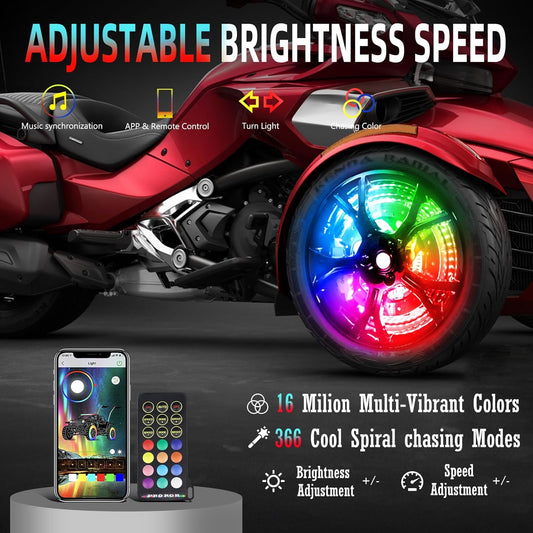
RGB wheel ring lights in this collection mount behind the wheel on the brake dust shield or hub to light the rim in solid, chasing or dancing color patterns. Sets come in diameters for cars, pickups, UTVs and ATVs, in single or double-sided rings, with app and remote control, and there are model-specific kits for Can-Am Spyder and Polaris Slingshot three-wheelers.
-
4PCS 15.5 Inch Chasing RGB LED Wheel Rim Light Kit
Regular price $199.87 USDRegular priceUnit price per$179.99 USDSale price $199.87 USD -
4PCS 12 Inch Dancing Color Chasing RGB LED Wheel Rim Light Kit for UTV, ATV & SXS Vehicles
Regular price $239.99 USDRegular priceUnit price per$279.99 USDSale price $239.99 USD-14% -
4PCS 17 Inch Chasing RGB LED Wheel Rim Light Kit
Regular price $199.99 USDRegular priceUnit price per$299.99 USDSale price $199.99 USD-33% -
Wheel Ring Lights fit for All Cam-Am Spyder Models 2017-2024
Regular price $329.98 USDRegular priceUnit price per$399.99 USDSale price $329.98 USD-18% -
RGB Chasings Wheel Ring Lights for All Polaris Slingshot Models 2015-2022 2023 2024+
Regular price $530.87 USDRegular priceUnit price per$609.99 USDSale price $530.87 USD-13% -
4PCS 14" Double Sided RGB LED Wheel Ring Lights with APP & Remote Control for Trucks Pickups Cars Offroad
Regular price $198.39 USDRegular priceUnit price per$256.65 USDSale price $198.39 USD-23% -
Chasing Color Wheel Ring Lights With Bluetooth and Remote Control Fit For All Cam-Am Spyder F3 Models 2017-2024
Regular price $296.98 USDRegular priceUnit price per$359.99 USDSale price $296.98 USD-18% -
15.5" Double Row Wheel Lights Compatible with Various Trucks SUV Car (4PCS)
Regular price $215.76 USDRegular priceUnit price per$265.64 USDSale price $215.76 USD-19% -
4PCS 15.5" Double Sided RGB LED Wheel Ring Lights with APP & Remote Control
Regular price $230.98 USDRegular priceUnit price per$265.58 USDSale price $230.98 USD-13% -


17" Double Row Wheel Lights with App & Remote Control Compatible with Various Trucks SUV Car(4PCS)
Regular price $201.28 USDRegular priceUnit price per$256.65 USDSale price $201.28 USD-22%




Wheel lights depend on wheel size and brake clearance rather than a year range, so OMOTOR lists ring diameter and the vehicles each set is shaped for. Orders ship free to US addresses from our warehouse, you have 90 days to return a set that does not fit, and a 1-year warranty with US-based support covers them.
What to look for
- Ring diameter: the ring must sit inside the wheel's inner lip and outside the brake caliper; measure that gap on your wheel rather than going by tire size.
- Single vs double-sided: double rows light the rim and the ground; single rows are thinner and clear tighter brakes.
- Mounting and wiring: rings fasten to the dust shield or hub with brackets, and each wheel needs a wire run to a controller; allow for suspension travel and steering.
- Control: app, remote or wireless music sync; make sure the controller runs all four wheels in step.
Shop related
- ATV and UTV accessories
- Polaris RZR accessories
- Can-Am Maverick X3 accessories
- RGB whip lights
- RGB rock lights
Frequently asked questions
What size wheel ring do I need?
Measure the open space between your brake caliper and the inside of the wheel barrel. The ring diameter should land in that gap with clearance on both sides; rings list the wheel sizes they typically suit, but your measurement rules.
Will wheel lights survive mud and water?
The rings are sealed for wet conditions and off-road use on UTVs and ATVs, but the controller and connectors should be mounted dry inside the body. Pressure-washing directly at the rings or connectors is the usual cause of failure.
Are these street legal?
Laws on colored underglow and wheel lighting vary by state, and most restrict red and blue on moving vehicles. They are generally fine for shows, trails and private property; check your state's rules before running them on public roads.