
Portable power stations in this collection are battery packs with AC outlets, USB ports and 12V outputs that run camping gear, a CPAP, laptops and small appliances away from the grid. The range runs from compact units for a weekend of phone and lantern charging to larger LiFePO4 stations that pair with a solar panel for home backup, RV trips and hurricane-season outages.
-
Portable Power Station 56000mAh, 179.2Wh For Hurricane Emergency/Outdoor Camping/RVs/Home Use
Regular price $199.72 USDRegular priceUnit price per$256.64 USDSale price $199.72 USD-22% -
Portable Power Station 28000mAh LiFePO4 Battery, 100W (200W Surge) For Outdoor Camping, Emergency, Travel
Regular price $120.00 USDRegular priceUnit price per$145.64 USDSale price $120.00 USD-18% -
600W (1200W Surge) Portable Power Station with 100W Solar Panel, 576Wh (180,000mAh) For Home & Emergency, Camping & RVs, CPAP
Regular price $445.49 USDRegular priceUnit price per$496.65 USDSale price $445.49 USD-10% -
Portable Power Stationwith 350W AC Outlets(600W Surge), 288Wh (90,000mAh) LiFeP04 Battery For Outdoor Camping, CPAP, Home & Emergency
Regular price $254.49 USDRegular priceUnit price per$306.64 USDSale price $254.49 USD-17% -
Portable Power Station 300W (600W Surge), 204Wh For Outdoors Camping Essentials Backup Bank Emergency, RV, Off-Grid Living
Regular price $204.00 USDRegular priceUnit price per$289.65 USDSale price $204.00 USD-30% -
Portable Power Station 300W (600W Surge), 192Wh (60,000mAh) For Outdoor Camping, Traveling, Home & Emergency
Regular price $183.99 USDRegular priceUnit price per$195.63 USDSale price $183.99 USD-6% -
Portable Power Station 600W, 288Wh For Outdoor Camping/RVs/Home Use
Regular price $269.99 USDRegular priceUnit price per$365.64 USDSale price $269.99 USD-26% -
Portable Power Station 28,000mAh Battery 200W Peak Solar Power Bank
Regular price From $112.00 USDRegular priceUnit price per$156.65 USDSale price From $112.00 USD-29%

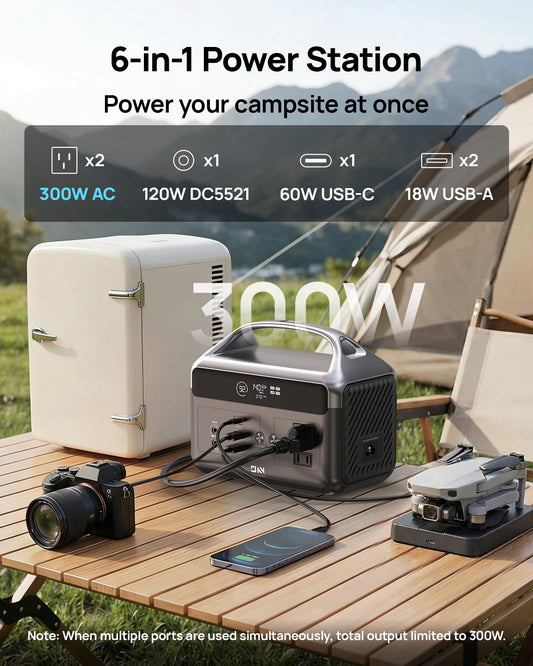


Choosing one is about matching watt-hours and rated output to what you actually plug in, so OMOTOR lists both plainly on each page and spells out the solar input each unit accepts. Shipping within the US is free from our own warehouse, returns are accepted for 90 days, and a 1-year warranty and US-based support back every station.
What to look for
- Rated vs surge watts: an appliance's startup draw can exceed its running draw; the continuous rating must cover running watts and the surge rating the startup.
- Watt-hours vs needs: add up the watts of each device times hours of use; a CPAP overnight needs a very different capacity than a phone and a lantern.
- Battery chemistry: LiFePO4 cells tolerate more charge cycles and heat than standard lithium-ion, at the cost of some weight.
- Recharge options: check whether the unit recharges from a wall outlet, a car socket and solar, and roughly how long each takes.
Shop related
Frequently asked questions
Can a power station run a CPAP all night?
Yes, if its watt-hour capacity covers your machine's draw for the hours you sleep. Turning off the humidifier and heated tube cuts consumption a great deal. Check your CPAP's label and the station's capacity before relying on it for travel or outages.
Does the solar panel come with the station?
Only on listings that say so in the title. The other stations accept a panel through their DC input, and the product page gives the voltage range and connector that input accepts, so you can add a matching panel later.
Is it safe to use indoors?
Power stations produce no exhaust, so they are suitable for indoor and tent use, unlike a gas generator. Keep them out of direct heat and water, charge in a ventilated spot, and do not cover the vents while running a heavy load.